 Iran Energy News Oil, Gas, Petrochemical and Energy Field Specialized Channel
Related Articles


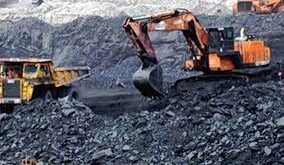
South Korea’s move to kill coal will almost certainly have repercussions on two of its largest energy customers, Australia and the United States.
A decision on the polluting fossil fuel was made at the COP30 climate conference in Brazil, when South Korea’s Ministry of Climate, Energy and Environment announced plans to retire most of the country’s coal-fired power plants by 2040, and to at least halve its carbon emissions by 2035. Forty of the plants already have confirmed closure dates.
South Korea has been criticized for not acting faster to address the climate, according to the Guardian.
A new policy direction came with the election of a more liberal president in June, Lee Jae Myung, who campaigned for stronger climate commitments than his conservative predecessor, Yoon Suk Yeol.
The country is a major importer of coal and natural gas and lags its counterparts in the adoption of renewable energies.
The Guardian notes South Korea has the world’s seventh-largest coal power fleet and is the fourth-largest thermal coal importer behind China, India and Japan. Coal provides about 30% of its electricity.
It is also a significant importer of metallurgical coal, used in steelmaking, and has substantial nuclear and gas-power fleets, each supplying roughly one-third of its electricity.
By contrast, renewable energy generated just 10.5% of South Korea’s domestic power last year. Japan, whose economy is more than twice the size of South Korea, uses double the amount of renewable energy.
There are plans to boost offshore wind power capacity to 4 gigawatts, around 10 times the current level.
Climate activists are rejoicing South Korea’s move away from fossil fuels, but the policy places the country in a quandary with the United States.
That’s because, as part of a trade deal with the Trump administration that would see it avoid higher tariffs, South Korea agreed to raise imports of US liquefied natural gas.
The Associated Press reports Talks are underway for South Korea to invest $350 billion in U.S. projects and purchase up to $100 billion worth of U.S. energy products, including LNG, a natural gas cooled to liquid form for easy storage and travel. It burns cleaner than coal, but still causes planet-warming emissions, especially of methane.
It’s important to note that the agreement with the US is still under negotiation. AP says depending on the deal’s duration, the country may import between 3 and 9 million tons of US LNG a year.
The quandary is that South Korea is making deals with the United States to import more LNG at the same time as setting a target to cut its LNG import percentage from almost a fifth last year to 10.6% by 2038.
Insung Lee with Greenpeace in Seoul is skeptical:
“If we just replace coal plants with LNG, that means the coal exit actually doesn’t lead to a green transition and merely shifts Korea’s addiction from coal to gas, which undermines the whole spirit of climate action,” AP quoted Lee saying.
The decision to close coal plants, meanwhile, is sounding the alarm in Australia, the world’s second-largest coal exporter behind Indonesia, and the planet’s biggest exporter of met coal by far.
Australia expects to export $1.5 billion worth of thermal coal to South Korea in 2025, and is hoping for the same figure in 2026, according to analytics firm Kepler.
South Korea currently relies on coal for 30% of its energy needs, but within 14 years it could be zero.
At COP30, South Korea announced it would join the Powering Past Coal Alliance, a group of around 60 countries and 120 sub-national governments, businesses and organizations that are phasing out the use of fossil fuels. China hasn’t officially joined, but it plans on doing so.
But is there another explanation for South Korea’s plan to quit coal? Sources say it comes down to economics.
In most current scenarios, coal is significantly more expensive to run than building new renewable energy sources like wind and solar.
Studies show 99% of US coal plants are more costly to operate than replacing them with new clean energy, a trend accelerated by factors like the Inflation Reduction Act. Renewables, even with storage, offer lower Levelized Costs of Energy (LCOE) compared to coal, making coal economically uncompetitive for power generation. (AI Overview)
Kim Sung-hwan, South Korea’s Minister of Climate, Energy and Environment, said shifting from coal to renewables will increase the country’s energy security, by not relying as much on foreign imports; and it will boost the competitiveness of South Korean businesses.
How so? By making energy cheaper. In response, James Bowen, the director of consultancy ReMap Research, said that Australian coal exports could fall in value by 50% over the next five years.
“South Korea’s decision should prompt Australia to show leadership by discussing timeframes for its own fossil fuel phaseout while helping its regional neighbours to embrace clean energy,” he said via the Guardian.
Video blogger Sam Evans, aka ‘The Electric Viking’, notes that Australia too is reducing domestic coal usage. He said the government recently introduced ambitious domestic green energy plans, with the aim of increasing the proportion of electricity from renewable energy from 42% over the past year to 82% by the end of the decade.
“South Korea’s ambitious goal… shows that demand for coal is going to continue falling. We know that we’re hearing the same thing from China, that many coal power plants will be shut down over the next five to 10 years.
“It’s going to be a tsunami for coal. There’s going to be coal companies going bankrupt all over the world. So, if you want to short anything, this is what you should be shorting,” he concluded.