 Iran Energy News Oil, Gas, Petrochemical and Energy Field Specialized Channel
Related Articles


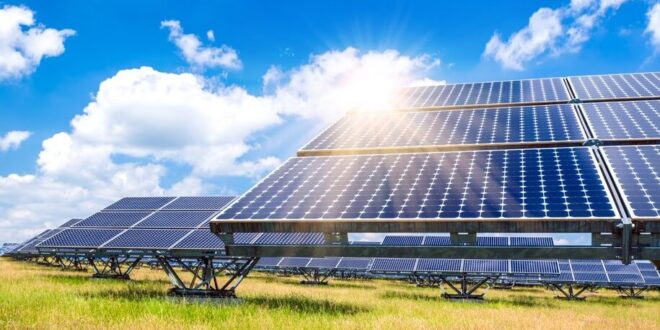
This week, the World Bank and the Rockefeller Foundation announced that they will funnel tens of millions of dollars into the budding African solar power sector. The two major global funding bodies are investing in non-profit organizations across the African continent to expand solar power projects with the tandem goal of helping to boost the agricultural sector through solar-powered technologies.
“The initiative will support the rollout of solar-powered cold storage facilities, refrigerators, water pumps and grain mills in Kenya, Nigeria, Ethiopia, Sierra Leone, Uganda and the Democratic Republic of Congo,” Business Insider reports. The move comes at a pivotal time for Africa, which is facing skyrocketing population growth and therefore huge increases in demand for both energy and food.
It also comes at a time when the African solar sector is just starting to take off. Thanks to its sunny skies and large tracts of undeveloped land, the continent boasts 60 percent of the planet’s best solar power potential, but generates just 2 percent of its electricity from solar. However, “falling hardware prices and rising efficiency have led to a boom in microsolar projects across the continent,” according to a recent report from Semafor.
A flood of cheap solar panels from China has enabled a renewable revolution in Africa, with the continent’s solar panel imports nearly tripling over the last two years. The growing affordability of this solution is proving pivotal to Africa’s ability to “leapfrog” over fossil fuels and straight to economic development powered by clean energy.
In order to avoid the worst impacts of climate change on a global scale, all nations rich and poor need to undertake the costly and difficult process of transitioning their economies toward low- and zero- emissions energy sources. But some countries – including many in Africa – are still concerned about developing their economies at any cost, with little to no bandwidth or budget to consider making sure that such a development is just and eco-friendly.
Moreover, in a cruel irony, many of the poorest nations in the world will experience climate change earliest and most catastrophically, all while having contributed the least to global greenhouse gas emissions. In an attempt to redress some of these imbalances, and to address decarbonization as a problem without borders, rich nations have forged agreements to funnel climate financing to poor nations to advance their clean energy transitions.
But many of those promises have been broken, and what has been delivered has, in large part, been too little, too late. Leaders of small island nations in the South Pacific, the most vulnerable countries to climate change, have been outspoken on these injustices.
“It is past time for the rich world to meet its obligations and get money to where it’s needed most,” Marshall Islands President Hilda Heine told the United Nations General Assembly last September. “We’ve heard the promises – but promises don’t reclaim land in atoll nations like mine.”
“Those who shoulder the blame must foot the bill,” Fiji Prime Minister Sitiveni Rabuka went on to add.
However, in Africa, the calculus is complicated. While the continent dearly needs backing to develop massive renewable energy potential, African leaders do not want to fall into a familiar trap, in which the continent’s riches are exploited and exported to wealthy nations while Africans reap few of the benefits. While Chinese solar panels have helped the African solar sector get off the ground, climate finance initiatives like this one from the World Bank and the Rockefeller Foundation could help fortify local supply chains.
In a 2025 report on African-made solar panels, Clean Technica writes that “African climate leaders say the continent, which holds more than 30 percent of the world’s critical minerals, should be an industrial actor — not an importer — in the clean energy transition.”