 Iran Energy News Oil, Gas, Petrochemical and Energy Field Specialized Channel
Related Articles
Latin America is attracting greater attention from international investors thanks to its strong renewable energy and critical mineral potential. In recent years, the region’s green energy capacity has steadily grown, while more mineral mining projects are developed, and the electric vehicle (EV) market is beginning to expand. As the United States takes a back seat in renewable energy deployment, this industry is taking off in other parts of the Americas.
Over 65 percent of Latin America’s electricity now comes from renewable sources, which is around double the global average. Hydropower was the first renewable energy source to be developed in the region, as countries exploit their natural resources to generate clean energy. Hydropower still contributes around 45 percent of Latin America’s electricity, with both Costa Rica and Paraguay close to achieving wholly hydropower-generated electricity.
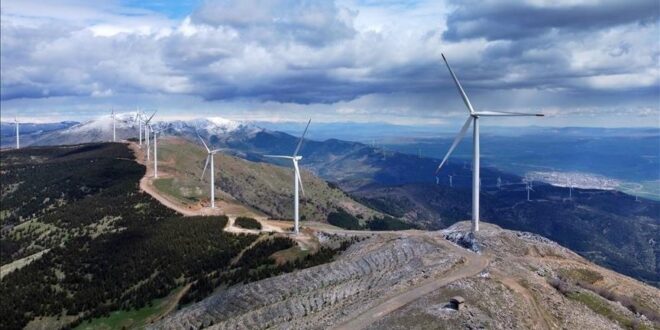
In recent years, there have also been significant investments in solar, wind, and bioenergy projects, which have helped to diversify the region’s renewable energy portfolio. Wind and solar power now contribute around 17 percent of the region’s electricity. Several governments have introduced net-zero carbon emissions targets and ambitious climate commitments alongside this development, making the region attractive for investors. Since 2014, over $250 billion in green, social, and sustainability bonds have been issued in Latin America and the Caribbean, demonstrating the growing interest in the region’s green energy industry.
Latin America has attracted high levels of investment in its mining sector in recent years, as companies worldwide invest heavily in critical mineral mining to support the growing demand for the resources, driven by renewable energy and EV market growth. In the first three quarters of 2025, global mining mergers reached $30 billion, with 74 percent going to Latin America, according to a recent report from McKinsey & Company and the Future Minerals Forum.
Latin America and the Caribbean region should continue to expand its renewable energy capacity, as forecasts suggest that electricity consumption in the region could increase by 90 percent by 2050 under existing policies, or as much as 180 percent under current scenarios, due to greater urbanisation, economic growth, and electrification across the region.
While development has progressed rapidly in recent years, there is still further to go. The World Economic Forum’s (WEF) Energy Transition Readiness Assessment (ETRA) 2025 showed that while Latin America’s sustainability and equity scores are relatively strong, progress on energy security and enabling conditions – such as infrastructure, finance, innovation, and human capital – continue to lag behind other regions.
In addition, some countries’ renewable energy industries in the region are much more advanced than others, with states such as Argentina and Mexico still relying heavily on fossil fuels. Greater investment in the region’s energy infrastructure could help better prepare it for a shift to renewable energy. At present, transmission and distribution losses average around 13.5 percent, compared to the global average of 10.2 percent, while ageing grids and limited interconnections restrict the connection of new renewable energy projects.
While Latin America is attracting greater interest in its mineral mining sector, investment in green energy still falls behind other parts of the world. The WEF estimates that clean energy investment in 2025 totalled $70 billion, equivalent to around 4 percent of global investment in the sector, and marking a 25 percent increase on 2015 investment. The WEF suggests that Latin America requires around $150 billion a year in investment by 2030 to support sectoral growth, with $30 billion per year going towards grid infrastructure alone until 2035. Almost two-thirds of this funding is expected to come from private capital.
To attract higher levels of investment, countries must address challenges such as high interest rates to mitigate risk for investors. Some countries in the region have already made strides in recent years, with Brazil, Peru, and Chile mobilising almost $4 billion to build over 10,500 kilometres of new transmission lines, a scheme that could be replicated in other Latin American countries. Governments could attract greater interest in the sector not only by doubling down on climate policies, but also by addressing regulatory uncertainty and streamlining regulatory and licensing processes for investors.
Further, the region must invest in education and skills development. There is a persistent skills gap, due to a shortage of technical and engineering skills in several countries. This makes it difficult to deploy higher levels of renewable energy at any speed. However, greater investment in training and development could help to better prepare Latin America for new green energy deployment.
Latin America and the Caribbean have made strides in renewable energy development and mineral mining over the last decade, with green energy now contributing a significant proportion of the region’s electricity generation. However, greater private investment will be required to expand the region’s renewable energy capacity in the coming decades, in line with the anticipated demand growth, which can be supported by enhancing regulatory systems and reducing the financial risk for investors.