 Iran Energy News Oil, Gas, Petrochemical and Energy Field Specialized Channel
Related Articles
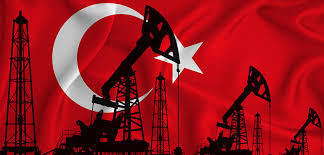
Turkey’s state-run energy champion Turkish Petroleum Corporation (TPAO) is on track to dramatically scale up production, with daily oil and gas output expected to reach around 500,000 barrels by 2028, Energy and Natural Resources Minister Alparslan Bayraktar said this week.
Speaking to local media, Bayraktar said the projection is based on current reserves and ongoing developments, but stressed that Ankara’s longer-term ambition is even larger. The government ultimately wants TPAO to become a one-million-barrel-per-day producer, combining organic growth with mergers, acquisitions, and an aggressive international exploration strategy.
Putting the production goal in context, Turkey consumed roughly 1.15 million bpd in 2025, and imports most of its crude oil from Russia, Iraq, and Saudi Arabia.
“Our goal is for TPAO to write a new growth story through mergers and acquisitions,” Bayraktar said, describing 2026 as a pivotal year when multiple flagship projects begin to deliver tangible results.
Domestically, Turkey’s production push is anchored by the Sakarya gas field in the Black Sea, where output is set to rise from roughly 9.5 million cubic meters per day to 20 million cubic meters per day by 2026. Once achieved, domestic gas production will be sufficient to supply 8 million households annually, up from about 4 million today. The expansion is being supported by TPAO’s growing offshore drilling fleet, which now includes four active drillships and two newly acquired seventh-generation vessels scheduled to enter service in early 2026. Turkey’s total drilling fleet is set to become the fourth-largest deep-sea energy fleet on a global scale.
Turkey is also preparing to break new ground onshore. Bayraktar confirmed that the country’s first horizontal shale oil drilling campaign will begin in Diyarbakir in 2026, with 24 wells planned. A similar shale gas initiative is being developed in the Thrace region as Ankara looks to diversify its domestic hydrocarbon base.
Internationally, TPAO is accelerating its footprint across several frontier and semi-frontier basins. Drilling operations are set to begin in Pakistan next year following recently signed offshore and onshore agreements with local partners. In Somalia, extensive seismic surveys have already been completed across three offshore blocks, and deep-water drilling—at depths of up to 3,000 meters—is planned for 2026 under naval protection, reflecting both the technical complexity and security risks involved.
The company is also evaluating opportunities in Iraq, Syria, Azerbaijan, and Turkmenistan, with Turkish gas imports from Turkmenistan potentially rising to 3 billion cubic meters annually as negotiations progress.
Beyond oil and gas, Energy Minister Bayraktar highlighted Turkey’s broader resource ambitions. TPAO-linked projects are advancing gold production in Niger, where seven fields are under development, and Ankara is moving to secure a foothold in rare earth elements, viewed as critical for electric vehicles, wind turbines, and advanced electronics. The construction of a major rare-earth processing facility in Eskisehir’s Beylikova district is scheduled to begin in 2026.
Taken together, Turkey’s strategic plan is to is no longer to position itself as a purely domestic producer, but as a regional and global upstream player, using state backing, an expanding fleet, and geopolitical reach to build scale in a tightening global energy landscape.