 Iran Energy News Oil, Gas, Petrochemical and Energy Field Specialized Channel
Related Articles
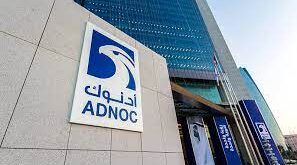

British aviation company Rolls-Royce has big plans for nuclear power, as well as other major energy projects, having been selected as the United Kingdom’s preferred bidder to build the country’s first small modular reactors (SMRs) last year. The company is expected to fast-track the development of the U.K.’s first SMRs, as well as explore other innovative fields, such as producing power from space.
In June, the U.K. government announced that Rolls-Royce SMR had been selected as the preferred bidder to partner with Great British Energy – Nuclear (GBE-N) to develop SMRs, pledging almost $3.3 billion of public investment for the SMR programme. In November, the government announced plans to develop a first-of-its-kind nuclear power station on the Welsh island of Anglesey, with works scheduled to start in 2026 and first power generation expected by the mid-2030s.
After several months of waiting, the government approval means that Rolls-Royce can finally ramp up SMR development this year, with the company expected to make waves in Europe. Rolls-Royce is developing a 470-MW pressurised water reactor, which is expected to provide around 1.4 GW of power for the first three units at the Welsh Wylfa project. The SMRs will be constructed at the site of the decommissioned Wylfa nuclear plant, which closed in 2015.
The U.K. is expected to be the first European country to deploy commercial SMR technology. In January, a spokesperson from GBE-N said, “We’ll be giving British companies the opportunity to be part of that wider international supply chain, giving them the chance to demonstrate their delivery experience across the U.K., Europe and beyond.”
Rolls-Royce is collaborating with Canada’s BWX Technologies (BWXT) on the design of its first SMR and will procure steam generators from the firm. BWXT has also agreed “to support future manufacturing and related activities” in the U.K., Czech Republic, and other parts of Europe, to secure a supply of parts including pumps, valves, heat exchangers, and tanks.
If the first U.K. SMR project is seen as successful, Rolls-Royce is expected to roll out the technology in other parts of Europe, thereby becoming a major early player in the region’s SMR industry. In 2025, Rolls-Royce SMR and Czechia’s largest public company, CEZ, signed an agreement to partner on?the development of 3 GW of SMR power in Czechia. Rolls-Royce also signed a strategic partnership with Czechia’s Skoda JS to explore the potential for component manufacturing for a global fleet of SMRs in August.
Rolls-Royce SMR also signed an agreement with Hungary last year to explore the expansion of the country’s nuclear power capacity through the addition of SMR technology. Hungary’s Deputy Minister of Foreign Affairs and Trade, Levente Magyar, said at the time, “The agreement we signed… is a good opportunity to start the essential information exchange between the partners that can contribute to the development of the first SMR of Hungary.”
The deployment of SMRs on a commercial scale across Europe could rapidly boost the region’s nuclear power capacity, as SMRs can be rolled out at a faster pace than conventional nuclear reactors, thanks to their efficient modular design. SMRs can be produced in factories before being transported to site to be assembled, where more SMRs can be added to boost output as required.
However, the European Nuclear Society’s Communications and Project Manager, Mattia Baldoni, told reporters that “greater alignment is needed in licensing approaches, component qualification, and long-term fuel cycle capabilities,” to make the deployment of SMRs across Europe a reality. Rolls-Royce will also need to rapidly hire and train staff to support the accelerated development and rollout of its SMR technology.
The U.K. approach to SMR development varies from that of the United States, where development is decentralised, with several private companies racing to deploy the country’s first SMRs.
In addition to developing its SMR technology on the ground, Rolls-Royce also has big plans for space. The British firm aims to send a nuclear micro-reactor to the lunar surface by the early 2030s. A micro-reactor differs from an SMR, providing a much lower power output of between 1 and 10 MW. As it is smaller than an SMR, it is easier to transport from site to site.
In July 2024, Rolls-Royce secured funding from the U.K. Space Agency under the National Space Innovation Programme to support the development of its space nuclear power technology. The firm is collaborating with academic partners from the University of Oxford and Bangor University on the design of the micro-reactor and is reportedly looking for partners from the U.K. and U.S. to send its reactor to space once developed.
Rolls-Royce has quickly become a key player in the development of Europe’s SMRs, with projects planned for the U.K. and several other European countries. If the deployment of the U.K.’s first SMR technology is successful, Rolls-Royce could see orders from other parts of the globe, as one of the world’s leading SMR developers.