 Iran Energy News Oil, Gas, Petrochemical and Energy Field Specialized Channel
Related Articles
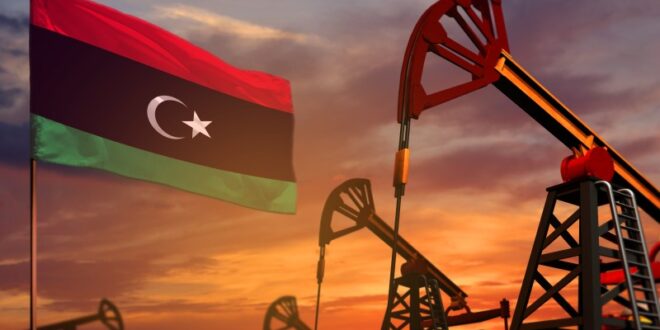
Over a decade since the Arab Spring and the civil war that followed, Libya has opened its doors back up to oil and gas exploration. Despite the ongoing political uncertainty, with Libya divided between two leaderships, the North African country has established a U.S.-Libya partnership and bilateral relations, as well as signed contracts with several oil majors for the redevelopment of its fossil fuel industry.
In November, Libya announced it was offering 22 exploration blocks, with 11 offshore and 11 onshore. As home to Africa’s biggest oil reserves, at around 50 billion barrels, Libya is thought to hold significant untapped potential. As the new acreage is close to existing infrastructure, it is appealing to investors looking to develop cost-effective operations.
At its peak, in the mid-2000s, Libya was producing around 1.75 million bpd of crude. Now, Libya’s average oil production stands at around 1.4 million bpd, according to the National Oil Corporation (NOC), having steadily climbed back up after several years of stagnation. Libya wants to increase production to around 2 million bpd in the coming years, with support from private investors.
In January, Libya and Egypt signed a memorandum of understanding (MoU) to strengthen bilateral cooperation in the oil and gas sector. The MoU establishes a framework for expanding technical cooperation, capacity building, and joint initiatives between the two countries’ energy organisations. It also highlights a greater focus on regional cooperation on energy to strengthen supply chains and boost energy security.
Libya’s Prime Minister, Abdulhamid Al-Dbeibeh, stated, “This agreement reflects our shared commitment with Egypt to deepen regional cooperation, exchange expertise and build stronger energy institutions that support production growth, energy security, and sustainable development.”
This month, Libya has also signed several contracts with the private sector to expand its oil production. The government signed a 25-year oil development agreement on January 24 at the Libya Energy and Economic Summit (LEES) in Tripoli with the French oil major TotalEnergies and U.S.-based ConocoPhillips, worth over $20 billion in foreign investment.
The deal was signed through NOC subsidiary Waha Oil Company, to increase crude production capacity by up to 850,000 bpd, with revenues forecast at over $376 billion, according to Prime Minister Al-Dbeibah. Waha typically produces between 340,000 and 400,000 barrels across five oil and gas fields. Its operations connect to the Sidra oil terminal via pipeline networks.
Libya’s NOC also signed an MoU with the U.S. oil firm Chevron in January, “to evaluate opportunities” in the North African country. No details were provided on whether the deal involves onshore or offshore opportunities. Chevron is following in the footsteps of U.S. firm ExxonMobil, which signed an MoU with NOC last August to carry out studies off Libya’s northwestern coast and in the offshore section of the eastern Sirte Basin.
Meanwhile, BP and Italy’s Eni commenced their first deepwater exploration well, Matsola-1, in Contract Area 38/3 in the eastern Gulf of Sirte in January. Ahead of the drilling, Eni’s COO, Guido Brusco, said he thought the license area was “probably the largest untapped block in the Mediterranean.” Eni confirmed at LEES 2026 that the firm intends to bring its Bahr Essalam gas project online by the end of the first quarter of 2026, which is expected to add around 100 million cubic feet per day to Libya’s gas output.
Libya expects to expand gas production to between 700 and 750 million standard cubic feet a day, to enhance domestic power generation, reduce energy shortages, and support industrial activity. Sectoral growth is also expected to help Libya drive down emissions by replacing higher-carbon fuels.
“Libya is showing that African nations can deliver energy projects at scale when stability, political will and investor-friendly frameworks come together… By prioritising energy access, domestic power generation and long-term investment, Libya is laying the foundation for inclusive growth and sustainable development,” African Energy Chamber Executive Chairman, NJ Ayuk, said at LEES 2026. “Libya’s resurgence reinforces a simple truth: Africa’s energy future will be built through pragmatism, partnerships and delivery – not delay,” Ayuk added.
While Libya is opening the doors to foreign investment in its energy sector once again, with significant potential for oil and gas production growth, there are still concerns over the North African country’s political stability. Hamish Kinnear, a senior MENA analyst at the risk intelligence firm Verisk Maplecroft, explained, “The broad improvement in Libya’s security situation since the 2020 ceasefire between the country’s competing governments is undeniable. That said, the political situation remains fraught, with major implications for the oil and gas sector.”
After years of stagnation, Libya is seeking foreign participation in its energy sector once again, aimed at expanding the country’s oil and gas production. This could bring in much-needed energy revenues over the coming years and support regional energy cooperation. However, operational success will depend heavily on whether Libya’s political stability is maintained.