 Iran Energy News Oil, Gas, Petrochemical and Energy Field Specialized Channel
Related Articles
Saudi Aramco has reported a fall in first-quarter net income, reflecting the turbulence of global energy markets and softer oil prices. However, the state-controlled oil giant underscored its commitment to shareholder returns with an increased base dividend, even as it recalibrates its overall payout strategy for the year to align with fiscal realities and invests heavily in long-term growth.
The Dhahran-based company announced on May 11 that its net income for the first quarter of 2025 reached $26bn, down from $27.3bn in the same period of 2024. Cash flow from operating activities also saw a decline to $31.7bn from $33.6bn, while free cash flow contracted to $19.2bn from $22.8bn year on year.
Despite the dip in headline figures, Aramco’s board declared a Q1 base dividend of $21.1bn, a 4.2% increase compared to the previous year, alongside a performance-linked dividend of $200mn, both payable in the second quarter. This comes against a backdrop of a significant planned reduction in its total dividend for 2025, forecast at approximately $85bn, down from $124bn in 2024. This adjustment is viewed as a critical measure to help ease Saudi Arabia’s budget deficit, particularly as Brent crude averages below $77 per barrel this year, substantially lower than the estimated $90 per barrel the Kingdom needs to balance its budget.
Amin Nasser, Aramco President & CEO, commented that “global trade dynamics affected energy markets in the first quarter of 2025, with economic uncertainty impacting oil prices.” He emphasised the company’s “robust financial performance,” attributing it to Aramco’s “unique scale, its reliability and flexibility, the value of its low-cost operations, and its emphasis on efficiency and advanced technology.”
Nasser added that such volatile periods “highlight the importance of disciplined capital planning and execution while we continue to take a long-term view.”
The company’s 2024 full-year results, posted in March, saw a net income of $105bn, with free cash flow of around $85bn falling short of its total dividend payout for that year. This performance was attributed to lower oil prices and production levels, which had reached a three-year low. Total hydrocarbon production in Q1 2025 was 12.4mn barrels of oil equivalent per day (boepd), a reduction from the previous year.
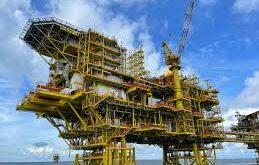
Aramco announced substantial capital expenditures of $12.5bn during the first quarter to support its long-term strategic growth. This includes ongoing work on its crude increment projects at Berri, Marjan and Zuluf, as well as the Dammam development project. These initiatives are designed to maintain its Maximum Sustainable Capacity (MSC) at 12mn barrels per day by offsetting natural reservoir declines, after plans to increase MSC to 13mn bpd by 2027 were shelved last year.
The hefty dividend payouts have visibly strained Aramco’s finances, pushing it into a net debt position recently, a notable shift from the net cash position of over $27bn held just over a year ago.
In a sign of its continued upstream prowess, Aramco announced a series of major oil and gas discoveries in April, spanning the Eastern Province and the Empty Quarter. Energy Minister Prince Abdulaziz bin Salman stated these finds would solidify the Kingdom’s leadership in the global energy sector.
Furthering its strategic ambitions, Aramco is also advancing its downstream and new energies portfolio. Recent milestones include definitive agreements for a 25% equity stake in Unioil Petroleum Philippines, the completed acquisition of a 50% equity interest in Blue Hydrogen Industrial Gases Co., and the launch of a CO2 Direct Air Capture pilot plant, signalling its commitment to lower-carbon energy solutions.